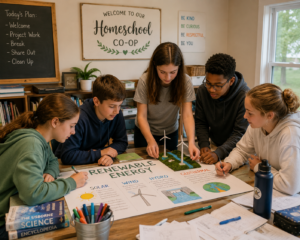
Homeschooling can look like a cozy home setting with a parent / guardian and child engaged in a learning activity, surrounded by books and educational materials. Homeschooling can also look like an online curriculum, world schooling, using certain education theories and models but no matter what you choose as your learning curriculum or style of learning, each state has their regulations and rules to adhere to.
Homeschooling allows parents/guardians the freedom to educate in various learning environments with various ways to teach content with less limited context.
Homeschooling is an increasingly popular choice for families looking to provide a customized and flexible education for their children. Whether you are considering homeschooling for a preschooler or a high school student, this guide will help you get started with essential steps, curriculum choices, and best practices.
Step 1: Understanding Homeschooling Laws
Before starting, familiarize yourself with your state’s homeschooling laws. Requirements vary by location and may include submitting a notice of intent, maintaining attendance records, and participating in standardized testing. Organizations like the Home School Legal Defense Association (HSLDA) provide up-to-date information on state regulations.
Resources:
Georgia Home Education Association : https://ghea.org/georgia-law/
Advocates of Homeschooling: https://hslda.org/legal/georgia
Step 2: Setting Goals and Creating a Learning Plan
Each age group has unique educational needs. Define your goals based on academic, social, and personal development priorities for your child.
Pre-K & Kindergarten (Ages 3-6): Focus on play-based learning, early literacy, and motor skills development.
Elementary (Ages 6-11): Build a strong foundation in reading, math, and science through hands-on activities and interactive lessons.
Secondary (Ages 12-18): Develop critical thinking, career exploration, and advanced subject knowledge tailored to your child’s interests and future goals.
Resources:
Canva: https://www.canva.com/lesson-plans/templates/
Teacherspayteachers: Lesson Plans
Step 3: Choosing a Homeschooling Style & Curriculum
Different homeschooling methods cater to different learning styles. Consider these approaches when selecting a curriculum:
Traditional: Mimics public school with structured lessons and textbooks (e.g., Abeka, Bob Jones University Press)
Classical: Focuses on grammar, logic, and rhetoric (e.g., Memoria Press, The Well-Trained Mind)
Charlotte Mason: Literature-rich education with nature studies (e.g., Ambleside Online)
Unit Studies: Thematic learning with cross-subject integration (e.g., Five in a Row)
Unschooling: Child-led learning based on interests and exploration
Resources:
Time4Learning: https://www.time4learning.com/homeschool-curriculum.htm
Miacadamey: https://miacademy.co/#/
Discoovery K12: https://discoveryk12.com/
Step 4: Setting Up a Homeschool Space
A well-organized learning environment enhances focus and productivity. Set up a dedicated area with essential supplies, including bookshelves, a writing desk, and educational posters. Make sure your space is adaptable for different activities, such as reading, art projects, and science experiments.
Resources:
Get a Homeschool ID for educators and get Discounts on supplies at some of the largest retailers like : https://homeschoolplanet.com/homeschool-id-card/
Step 5: Structuring Your Homeschool Day
Homeschooling offers flexibility, but structure is key for consistency. Create a schedule that includes:
Morning routine (breakfast, exercise, and a review of the day’s lessons)
Core subjects (reading, writing, math, and science)
Hands-on activities (experiments, field trips, and projects)
Breaks and free play to encourage creativity and movement
Extracurricular activities (sports, music, and clubs)
Resources:
Using one connected source: Microsoft Outlook Calendar /Google Calendar /Apple Calendar
Trello – Helps organize lesson plans and track progress.
Evernote – Digital note-taking for lesson planning.
Homeschool Planet – An all-in-one online planner with scheduling, grading, and record-keeping.
Tina’s Dynamic Homeschool Plus – Free customizable homeschool planner printables.
Homeschool Tracker – A digital tool for tracking assignments, grades, and attendance.
Step 6: Socialization and Extracurricular Activities
One of the biggest concerns for homeschooling families is socialization. Engage in:
Homeschool co-ops for group learning and friendships
Community activities like sports teams, music classes, and scouting
Volunteer work to develop social and leadership skills
Online learning communities for academic and social engagement
Resources:
Lead Homeschool
Homeschool Connect
Step 7: Tracking Progress and Evaluating Learning
Regular assessments help measure progress and make necessary adjustments. Keep a portfolio of completed assignments, projects, and tests. Some families choose standardized tests, while others use informal assessments such as discussions and presentations.
Resources:
Planners
📌 Homeschool Planet – Full-featured online planner with grade tracking and reporting.
📌 Homeschool Tracker – Customizable grading, attendance, and progress tracking.
📌 Trello – A flexible digital tool to organize assignments and track progress.
📌 Evernote – Great for keeping digital portfolios with notes, pictures, and files.
Assessements and Evaluations
Easy Peasy All-in-One Homeschool – Free placement tests and assessments.
📊 iXL – Tracks progress in math and language arts with analytics.
📊 MAP Growth Testing – Adaptive standardized testing used by homeschoolers.
📊 Let’s Go Learn – Personalized online diagnostic assessments.
Grading & Report Card Tools
📝 My Homeschool Grades – Tracks grades and transcripts.
📝 Grammarly’s Writing Reports – Helps assess writing progress.
📝 Khan Academy – Auto-tracks progress in various subjects.
Step 8: Transitioning to College or Career
For high school students, planning ahead is crucial. Consider:
Dual enrollment programs to earn college credits
Internships and apprenticeships for real-world experience
SAT/ACT preparation for college admissions
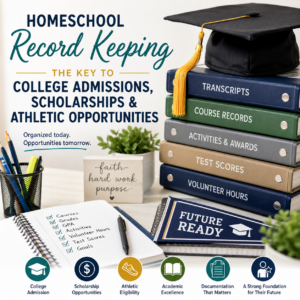
Transcripts and diplomas to meet graduation requirements
Resources:
College Admissions & Transcripts
🎓 HSLDA Transcript Service – Helps homeschoolers create professional transcripts.
🎓 Fast Transcripts – Automated transcript creation for homeschoolers.
🎓 Common App – Used by many colleges for applications (includes homeschool-specific guidance).
🎓 Khan Academy’s College Admissions Guide – Step-by-step college prep for homeschoolers.
Standardized Testing & College Prep
📚 The College Board – SAT, AP, and CLEP test registration and prep.
📚 ACT Test Prep – ACT test registration and study resources.
📚 Outschool – Live SAT/ACT prep classes.
📚 Modern States – Free online CLEP test prep (earn college credit while homeschooling).
Still Deciding, that’s Okay?
Just know that homeschooling can be a rewarding journey when approached with careful planning and a commitment to lifelong learning. By choosing the right curriculum, setting realistic goals, and providing ample opportunities for socialization and hands-on learning, you can create an enriching education experience tailored to your child’s needs. It has its challenges but the community of homeschooling parents and families are growing and the support his available. Let’s take the journey together and follow us on Facebook and Instagram at Georgia Homeschool Pulse.