We’ve all been there: staring at a child who is staring blankly at a textbook, dragging their feet through homework, or stressing over an upcoming spelling test. As parents, our instinct is often to say, “Just study harder.”
But what if the issue isn’t how much they are studying, but how they are studying?
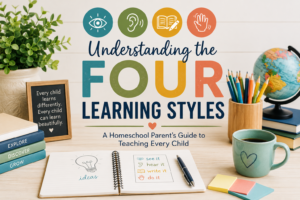
Enter the VARK learning styles model. Developed by Neil Fleming in 1987, VARK categorizes the different ways people prefer to take in and give out information. Understanding where your child falls on this spectrum can completely revolutionize their K-12 experience and lay a massive foundation for college success.
Decoding the VARK Model
VARK is an acronym that stands for four primary learning modalities: Visual, Auditory, Read/Write, and Kinesthetic.
Here is a quick breakdown of what these look like in a K-12 student:
| Learning Style | Description | Signs Your Child Might Be This |
| Visual (V) | Learns best through seeing. | Loves charts, diagrams, graphic novels, and color-coded notes. |
| Auditory (A) | Learns best through hearing. | Thrives in class discussions, remembers spoken instructions, hums or talks to themselves. |
| Read/Write (R) | Learns best through text. | Obsessed with lists, books, diaries, and writing out definitions. |
| Kinesthetic (K) | Learns best through doing/experience. | Fidgets while studying, loves science experiments, needs real-world examples. |
Note: Many kids are multimodal, meaning they prefer a combination of two or more of these styles depending on the subject!
Changing the Way Your Child Studies (and Retains) Information
When we force a Kinesthetic learner to sit still and read a 20-page history chapter, or demand that a Visual learner memorize a list of spoken vocabulary words, we are fighting against their brain’s natural wiring.
By tailoring study habits to their VARK style, you turn studying from a chore into a highly efficient process. Here is how retention shifts when you align habits with their style:
1. Visual Learners: Mapping the Mind
Instead of standard text notes, encourage your child to use mind maps, flowcharts, and highlighters. Seeing the physical layout of information helps them log it into their long-term memory.
- Quick Win: Use different colored flashcards for different concepts (e.g., green for science definitions, blue for formulas).
2. Auditory Learners: The Power of Talk
Auditory learners need to hear the information. Reading a textbook silently does very little for them.
- Quick Win: Have them teach the material back to you, record themselves reading their notes and play it back, or make up a catchy song or rhyme to remember facts.
3. Read/Write Learners: Bullet Journals & Summaries
These students thrive on the written word.
- Quick Win: Have them rewrite their class notes in their own words, build bulleted lists, or write out summaries of paragraphs they’ve just read.
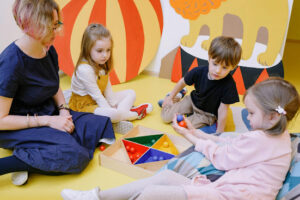
4. Kinesthetic Learners: Action-Packed Academics
Sitting at a desk is the enemy of retention for these kids. They need to connect physical movement to thought.
- Quick Win: Let them bounce on an exercise ball while reading, use physical objects (like blocks for math), or pace the room while reciting facts.
The Ultimate Payoff: Preparing for College
The jump from high school to college is notorious for its steep learning curve. In K-12, teachers often provide structured study guides and hold students’ hands through the material. In college, that safety net vanishes. Professors lecture, hand out a syllabus, and expect students to teach themselves outside of class.
If your child enters higher education already understanding their VARK profile, they gain a massive competitive advantage:
- Instant Study Adaptation: When faced with a massive, 300-person lecture hall (purely auditory/visual), a Read/Write student will know they need to immediately go to the library and type out comprehensive text summaries to survive. A Kinesthetic student will know they need to seek out lab time or real-world case studies.
- Efficient Time Management: College students are notoriously starved for time. Knowing exactly how to study means your child won’t waste three hours staring at a textbook using a method that doesn’t work for them. They can get the same retention in 45 minutes using a tailored VARK strategy.
- Reduced Exam Anxiety: Anxiety often stems from a feeling of being unprepared. When a student knows they have encoded information into their brain using their optimal modality, their confidence skyrockets.
The Bottom Line
Your child isn’t unmotivated, and they certainly aren’t incapable they might just be trying to translate a “Visual” lecture with a “Kinesthetic” brain. By identifying their VARK learning style now, you can help them unlock a personalized toolkit that will serve them from elementary school spelling bees all the way to college finals.
Have you noticed your child gravitating toward one of these styles already?